





2026 ISP Consumer Panel – review and reflections
The 2026 ISP Consumer Panel’s tenure ends on 30 June 2026. In recent months, its members (Mark Henley, Bev Hughson, Craig Memery and Jarra Hicks) have focused their efforts on:
-
conversations about finalising the 2026 ISP
-
the AEMC’s ISP review
-
scenarios development.
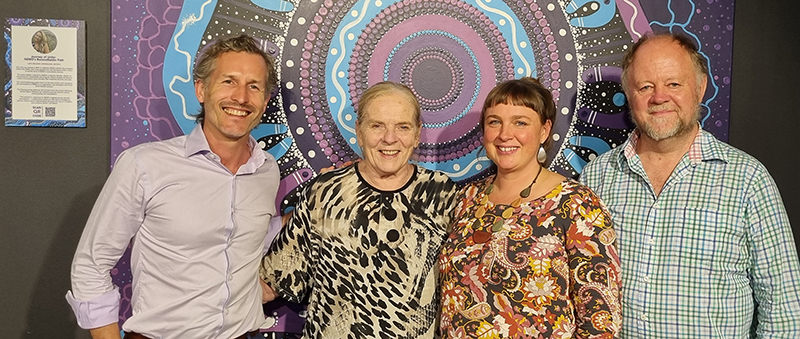
2026 ISP Consumer Panel members Craig Memery, Beverley Hughson, Jarra Hicks and Mark Henley.
The Panel has discussed aspects of the final ISP with AEMO staff as new data came to light in response to issues and perspectives presented in submissions responding to the Draft 2026 ISP and from further thinking. The 2026 ISP development cycle has featured some uncertainty about future demand for delivered supply, incorporating both the possible decline for household demand for NEM electricity as CER investment continues to grow, and the prospect of major industrial developments and data centres means demand could grow substantially.
There has also been significant home battery take up during the past 12 months or so and this is an example of how rapidly data for ISP modelling variables can change. The interest in CER from households continues.
The Panel made several recommendations in our submission to the Draft 2026 ISP and we sincerely appreciate the extent to which AEMO has considered our thinking and proposals.
We also discussed the narrative accompanying the final 2026 ISP. As a document and a process, the ISP must resonate with consumers generally and build social licence for the energy transition. While the ISP is complex and will be closely scrutinised by people with detailed expertise, the broader community needs to hear and understand a clear ISP story.
ISP review
The AEMC is conducting a review of the ISP, a requirement from when the ISP was established a decade ago. A final report is required by 1 July 2027. The review will focus on the purpose and remit of the ISP.
Both the 2026 and 2028 ISP Consumer Panels will contribute to this review.
The 2026 Panel has met with the AEMC review team and made a submission in response to the Consultation Paper and provided feedback about how the Review should engage with consumers.
Scenarios
The 2026 Panel was the first Consumer Panel to be able to engage actively on the scenarios that catalyse and are central to the ISP process. Since the ISP utilises a scenario planning process, scenario selection is crucial. One of the Panel’s main recommendations is for the 2028 ISP to include a ‘distributed energy’ scenario along with updates to the three continuing scenarios. A distributed energy scenario would reflect a dramatically more ‘distributed energy world’ where new technologies enable much more localised, affordable energy generation and distribution, where small and mid-scale generation and storage utilise an optimised and upgraded distribution network and thereby offset some investment needed in transmission and large-scale generation and storage.
Reflections
The energy landscape has shifted substantially since the Finkel Review proposed the establishment of an Integrated System Plan to fill an energy policy and planning void a decade ago.
The 2026 ISP is the fifth ISP, with Consumer Panels in place since 2020. Three ISP Consumer Panel members (Craig, Mark and Bev) have held these roles for four intense years and, together with Jarra who joined in 2026 and will join the 2028 Panel, we have considered many shifting trends.
Some of the bigger picture challenges we observe include:
- The energy transition is urgent
The ISP is a plan for the energy transition; the challenge is more urgent than it was a decade ago as more ‘carbon budget’ has been spent. The challenge is ‘to get on with it’ as expeditiously as possible. - ISP as transmission plan to whole-of-system plan
Early ISPs focused on transmission planning. In the 2026 ISP, the focus has moved to ‘firming and storage’ with a smaller number of new transmission line kilometres. This focus is likely to continue for the 2028 ISP. - Equity in transition
The energy transition is costly. As noted in the Panel’s Draft 2026 ISP submission, households are continuing to invest in CER and, as identified in the ISP, there is a large amount of grid-associated expenditure projected as well.
The energy transition brings many long-term benefits, but it could be costly in the short term. The transition’s costs should be shared equitably, and lower and modest-income households should not be expected to wear unequal risk. - Demand side
The 2026 ISP includes a Demand Side Factors report and AEMO is also planning to introduce Demand Side Statement of Opportunities reporting (to accompany NEM Electricity Statement of Opportunities and Gas Statement of Opportunities reporting). Demand side considerations are crucial and need to explore community attitudes and expectations along with the technical aspects of demand side considerations. - Community energy
Provided regulatory and market barriers can be addressed, community energy will become increasingly salient as communities work towards net zero and take greater control of their energy systems, with more interest in mid-scale, community-owned electricity ventures. - Social licence
The importance of building social licence for transmission, renewable energy zones (REZ) and generation projects has become ever clearer so affected communities also benefit. Social licence is also needed for the energy transition, in general and in detail. - What will it take?
The Panel’s response to the Draft 2026 ISP observed that for more than two decades Australian consumers have been promised cheaper energy while energy costs have consistently risen at a faster rate than incomes. While average generation costs are stabilising as lower-cost renewables and batteries expand, the cost of building the infrastructure has been rising rapidly. (Note, this is not unique to Australia.) This prompted us to ask what will it take for energy costs to be lower and remain lower? This question needs to be answered honestly and transparently by governments, energy companies and market bodies, otherwise consumer trust withers and social licence diminishes.
The Panel may be contacted by email: [email protected].
Acknowledgements
The retiring members of the 2026 ISP Consumer Panel enthusiastically congratulate the 2028 Panel members on their appointment.
We are deeply appreciative of the opportunity to be a part of the ISP process; for three of us (Mark Henley, Bev Hughson and Craig Memery) it has been four years of concentrated work, wide reading and critical thinking. Our journey has helped make a positive difference for consumers and it has been fun.
We conclude by thanking our consumer colleagues who attended the two forums we conducted and those who made submissions (written or verbal) to the ISP process. We also record our sincere admiration of the AEMO staff who sit behind the ISP detail. They are highly skilled, clever people who maintain a close connection with consumer interests and always make the time to consider any idea or challenge.